Project overview
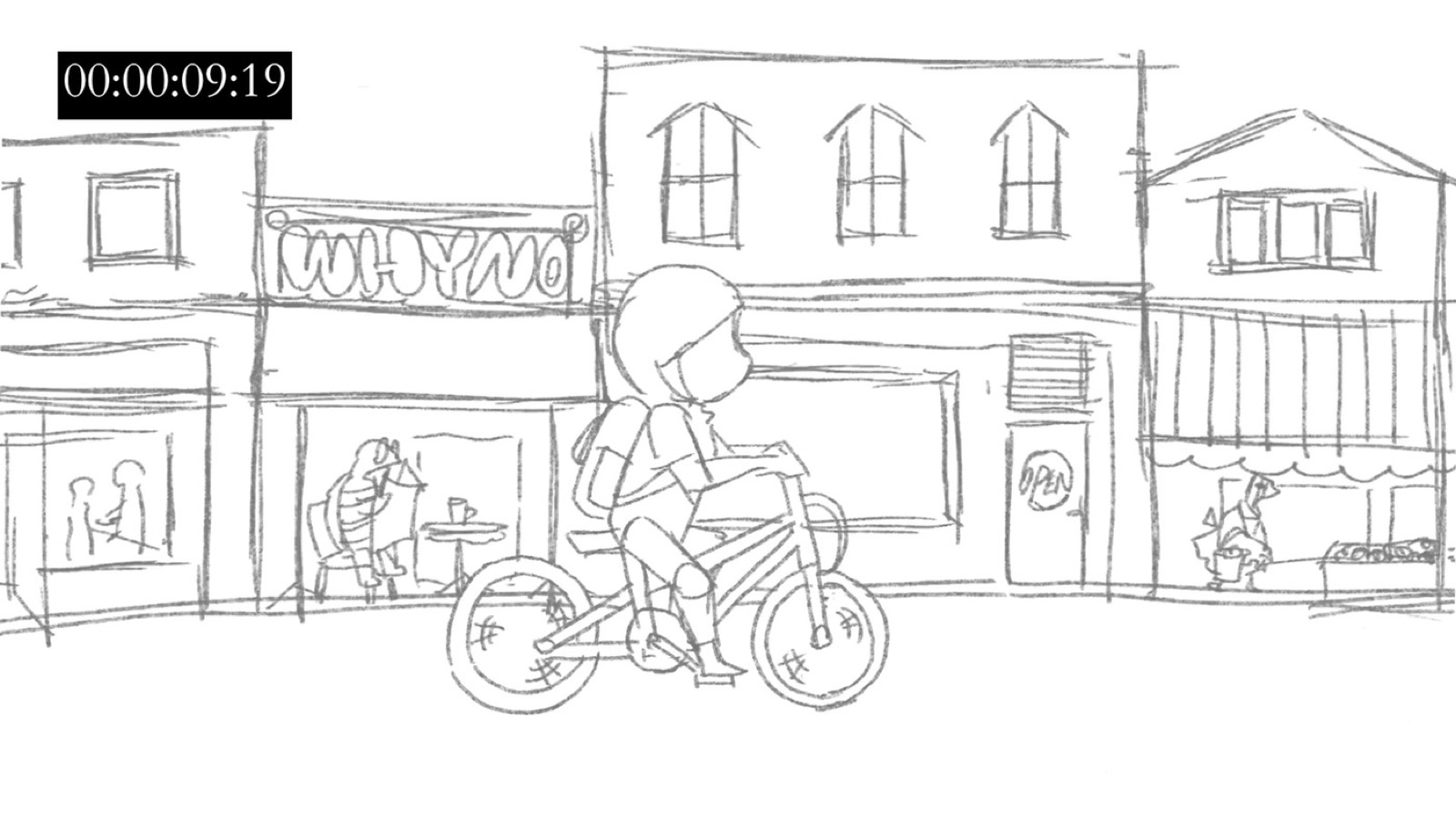
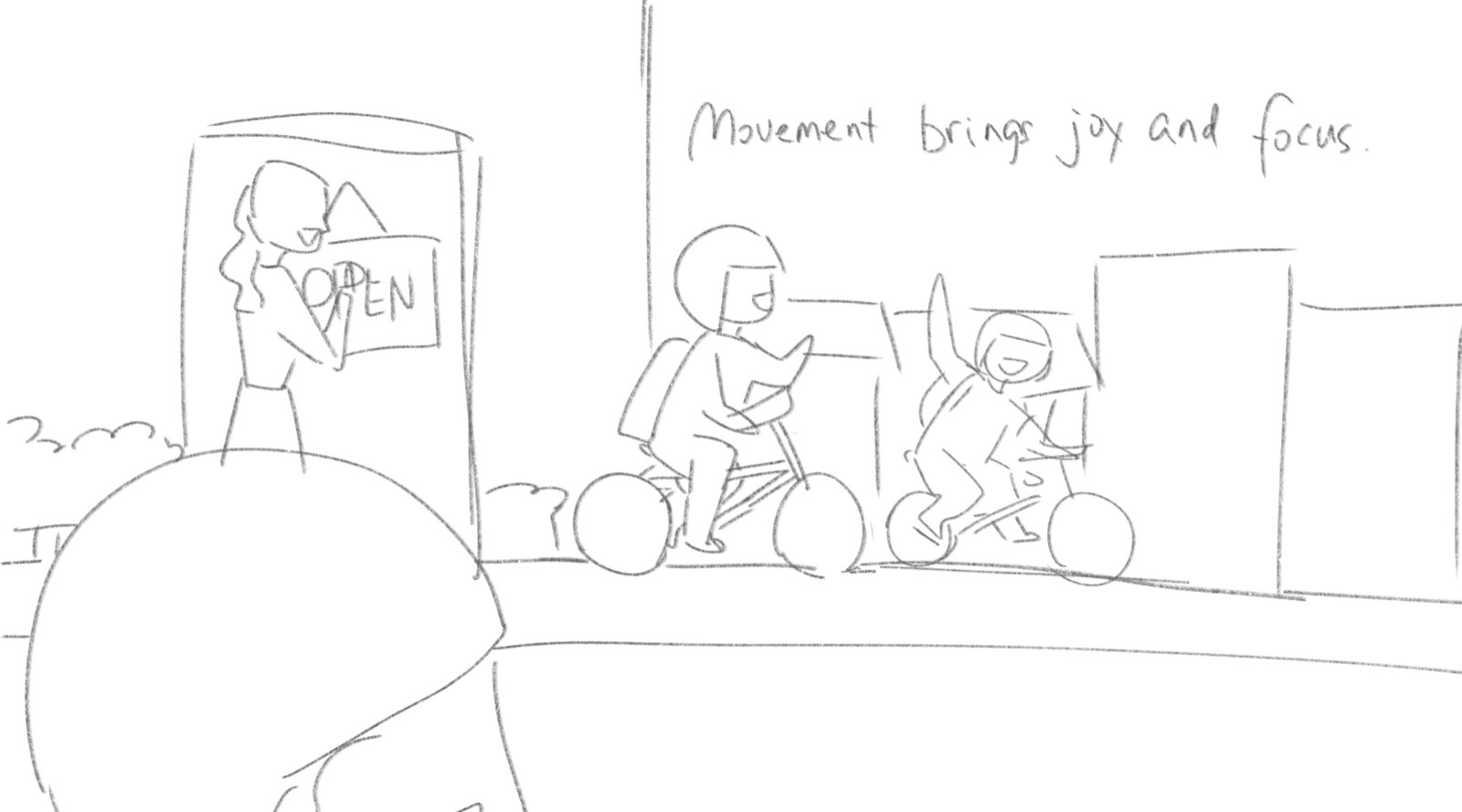
Sound Design for Motion brings together three experiments from the Sound 4 course. The work starts with a cycle-to-school animatic, first using music and environmental sound to establish mood, then moving into more specific Foley, dialogue and synchronisation. The final stage applies those lessons to the finished mix for the seagull ident.
These exercises moved sound from the background into the narrative. Instead of simply accompanying animation, it helps an audience understand space, character distance, changes in rhythm and emotional shifts.
Music and off-screen sound
The first stage focused on music and off-screen sound for the school commute. I organised the track into an upbeat opening cue, a warmer closing cue, birds, school crowds, city ambience and distant traffic.
After tutor feedback, I reduced the number of competing elements and concentrated on three environmental signals: nature, school and traffic. The scene still carries the spatial character of an everyday city, but the mix no longer distracts the audience by becoming too dense.
Foley and dialogue synchronisation
The second stage focused more closely on aligning action and sound. I recorded and organised a bicycle chain, bell, car horn, traffic signal and short dialogue such as “Bye mom!”, “Morning!” and “Hi!”.
Good Foley needs more than a realistic source; it must happen at the right moment and feel the correct distance away. I adjusted the chain rhythm to follow the pedalling, moved the traffic signal across the stereo field with fades, and refined dialogue volume, pitch and timing according to each character's position and tone.
Final mix
The final mix was created for the seagull motion ident. It combines festive background music, two seagull calls, outdoor crowd ambience and a short cartoon pop.
During work-in-progress feedback, the tutor noted that the seagull might be difficult to recognise from behind and suggested testing a bird call in place of the pop. After comparing versions, I kept the pop because it better supports the animation's joke, while the crowd ambience already establishes the setting.
Reflection
My biggest lesson was that sound design should enter the animation process earlier. Testing the bicycle wheels, street crossing, character eyelines and sound cues together during the animatic stage would make later synchronisation more natural.
Next time I will check asset licensing more rigorously and use a more professional audio-editing workflow from the start, keeping the mix, copyright record and final delivery equally clean.