This week, I explored how light, time and sound shape what an audience notices and feels. This journal documents the class exercise and shows how those tests informed the development of my Studio 4 animation.
Class Exercise — Slow Motion, Fast Motion and Sound
For this exercise, I recorded three slow-motion and three fast-motion videos using ordinary actions and public spaces. For the journal, I edited each recording into a shorter excerpt, selecting the key moments that best demonstrate the movement and the effect of changing speed.
Water pouring — slow motion
Coffee preparation — fast motion
Tram stop and passenger movement — fast motion
First-person perspective crossing the road — slow motion
https://youtube.com/shorts/4aLz-B9ZcY0
Tram entering Station — slow motion
Changing the speed did more than shorten or extend an action; it changed what I paid attention to.
In the slow-motion water video, details that usually pass unnoticed—the shape of the water and the movement of the hand—became more visible.
In the fast-motion coffee video, individual details became less important than the overall process, repetition and rhythm.
Selecting Two Videos and Testing Music
I selected the slow-motion water video because it made an ordinary action easier to observe, and the tram-stop video because it already contained a small emotional shift.
In the tram footage, a person approaches the tram, misses the closing door, begins to walk away and then boards when it opens again.
This gives the footage a simple structure:
expectation → interruption → uncertainty → resolution
I used this video to test how two music choices could change the audience’s reading of the same event.
Version 1 — Carmen
For the first version, I used music from Carmen. I expected it might feel too dramatic for an ordinary tram stop, but that mismatch became the point of the test.
The music makes the event feel staged and slightly comic. Its rhythm also matches the person’s movement and the tram doors, so this version feels more connected to the image.
Version 2 — Emotional Contrast
For the second version, I used a melancholic piece when the person misses the tram, then changed to more energetic music when the door opens again.
This version follows the character’s emotional shift more directly:
“I missed the opportunity” → “I still have another chance.”
The idea was clear, but the music did not connect with the visual rhythm as naturally as it did in the Carmen version.
This comparison showed me that music cannot be chosen only for the emotion it represents; timing and rhythm also determine whether sound and image work together.
Studio 4 Work in Progress — Developing the Uncanny Through Gradual Awareness
This week, I returned to my Assessment 2 feedback and translated some of the ideas I had described in writing into specific visual tests.
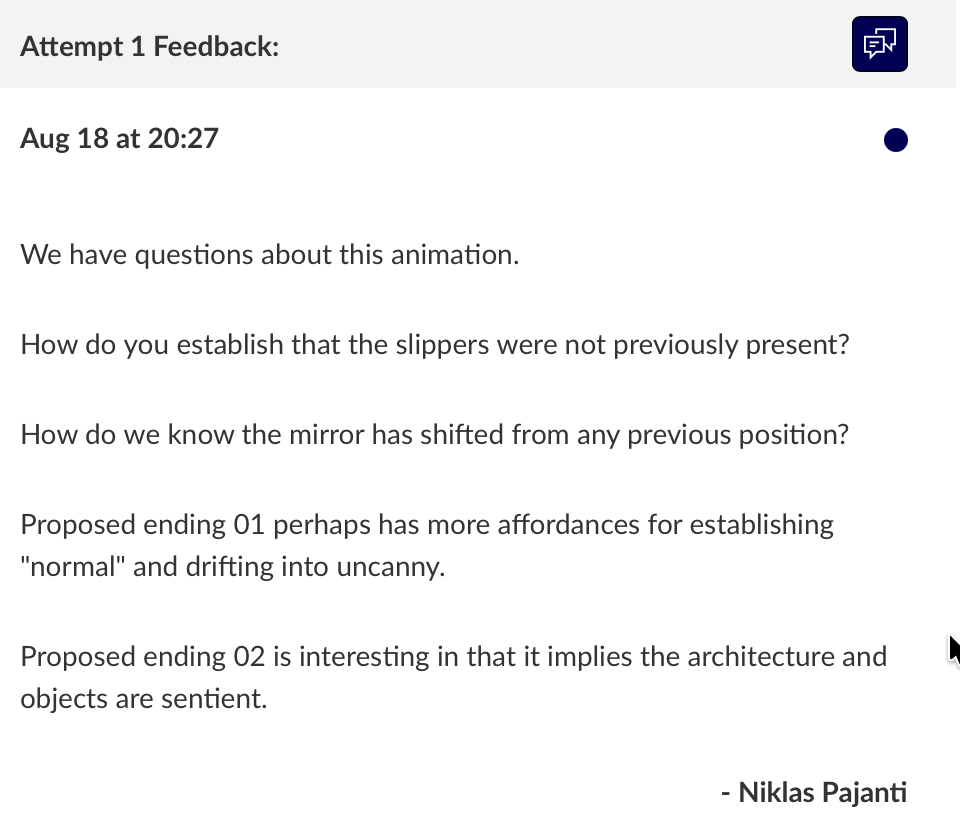
The main question was how to establish a clear sense of “normal” before the animation moves into the uncanny. I am testing this through shifts between third-person and first-person views, followed by changes that become more obvious over time.
Rather than answer each feedback point separately, I used the questions to test camera perspective, visual continuity and different levels of audience and character awareness.
1. Subtle Changes That May Initially Be Missed
The animation begins with small changes inside an ordinary environment.
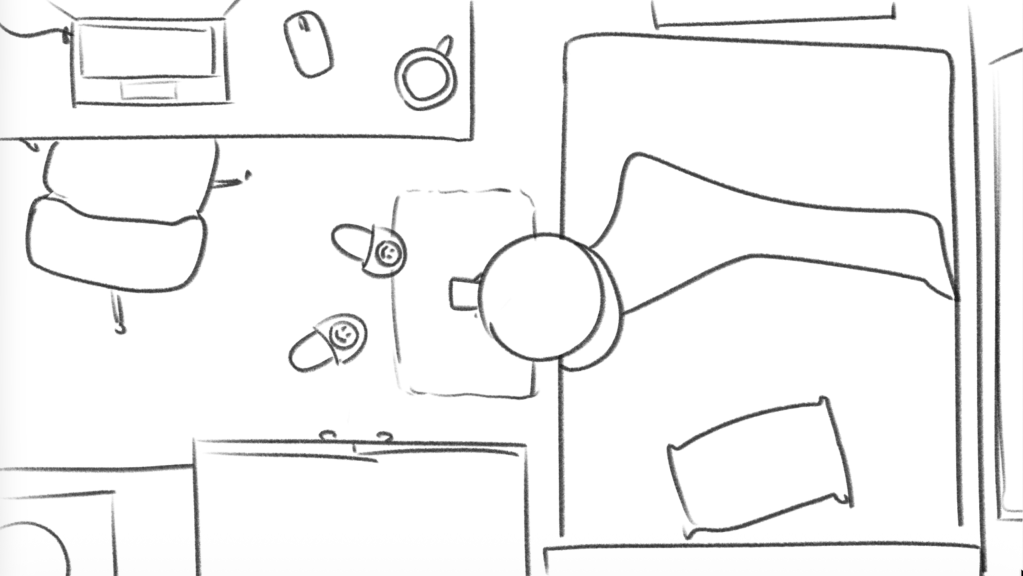
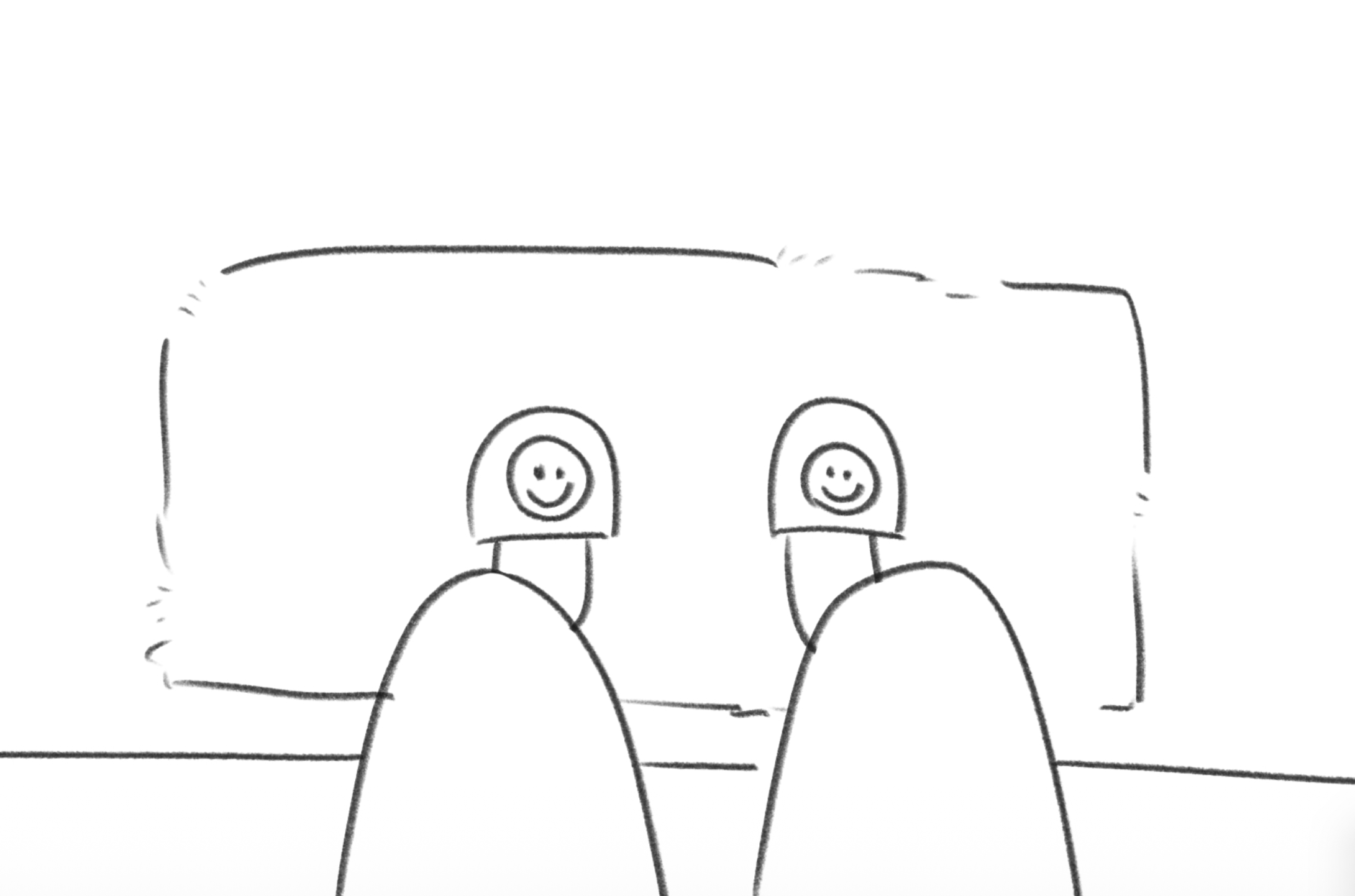
For example, the slippers change position between third-person and first-person shots. The audience can compare the space from different viewpoints while remembering how it looked before.
The slippers remain in the background, so some viewers may notice the change while others may miss it. I want the uncanny feeling to begin through this uncertainty, not through an obviously abnormal event.
To make these changes readable, I need clear visual anchors. If too many objects move when the camera angle changes, the difference may look accidental.
2. Creating a Difference Between Audience and Character Awareness
As the changes become clearer, I want the audience to understand that something is wrong before the character does.
In the bathroom sequence, the character begins washing their hair. The mirror first shows no shampoo foam; after they look away and continue, the foam suddenly appears.
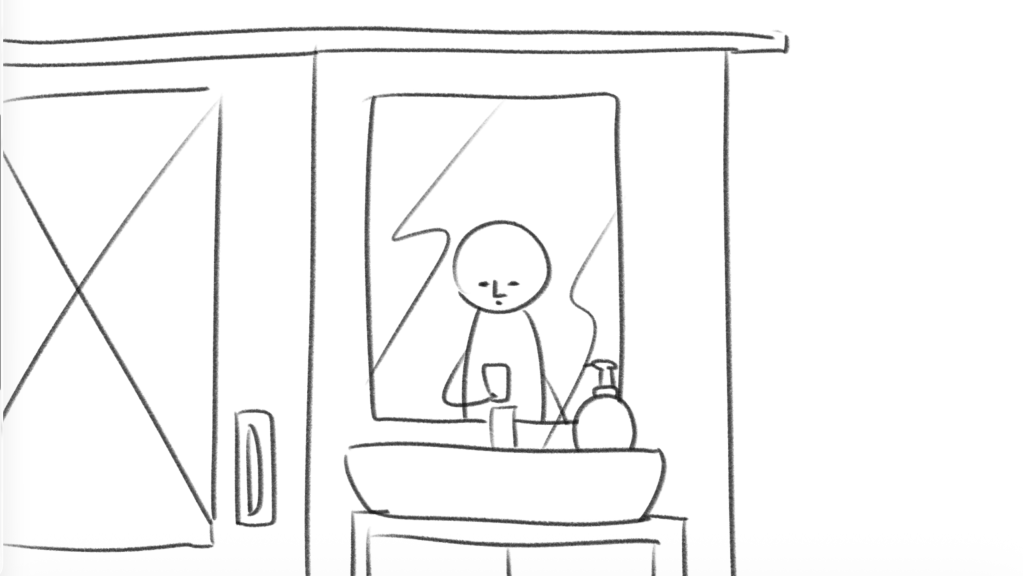
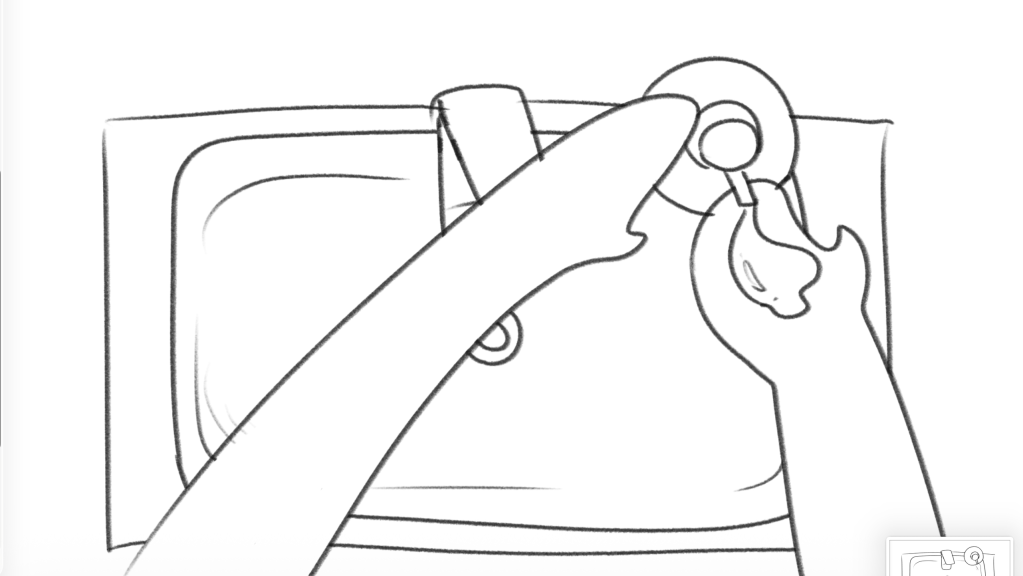
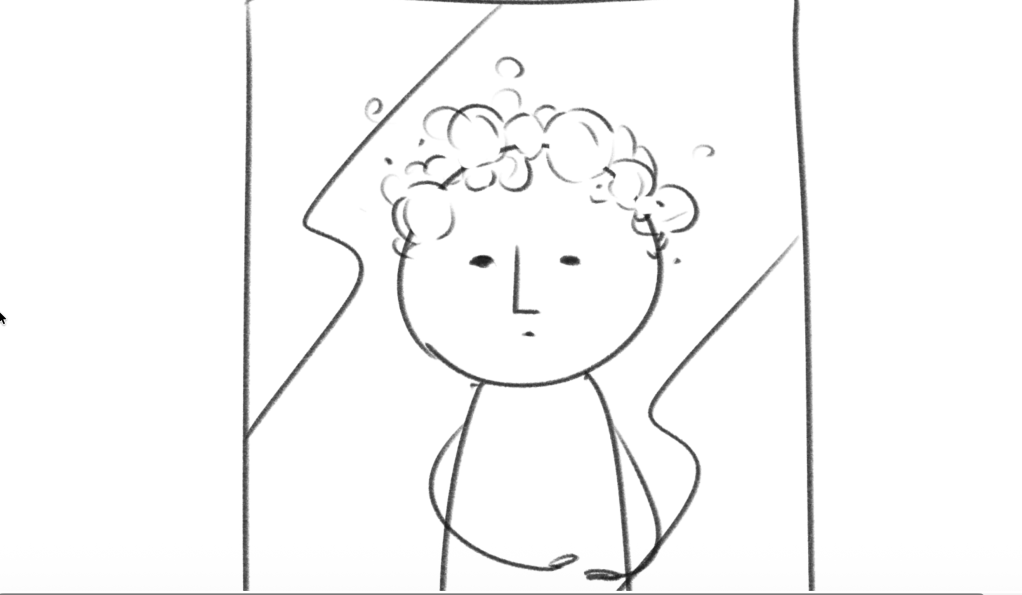
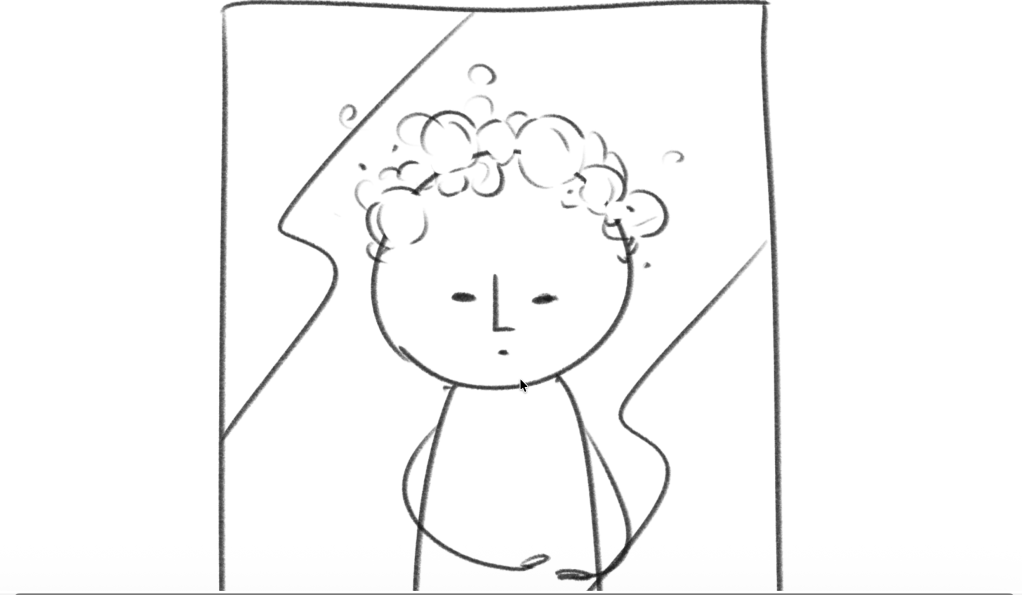
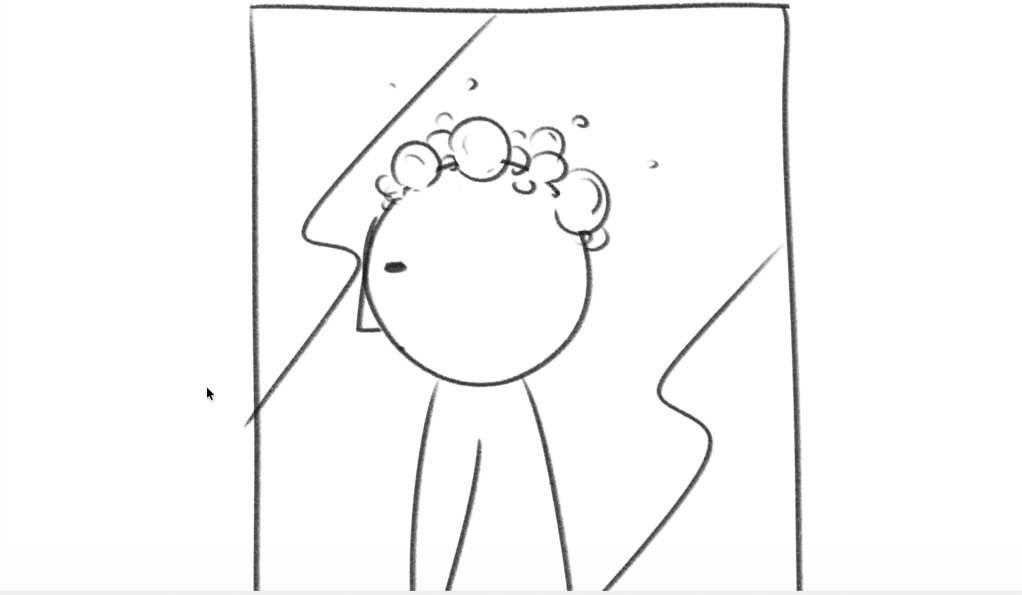
The character may explain this as distraction or forgetfulness, while the audience starts to question the continuity of the action.
This gap in awareness lets the uncanny develop without becoming dramatic too early.
3. Reaching a Point That Can No Longer Be Rationalised
Eventually, the changes need to reach a point that cannot be explained as distraction, memory or coincidence.
I am testing a later moment in which the character approaches the mirror and can no longer see their reflection.
Unlike the earlier background changes, this becomes a turning point. The audience and the character finally reach the same conclusion: something is genuinely wrong.
The progression is now:
subtle inconsistency → audience uncertainty → audience recognition → difference between audience and character awareness → shared recognition
This directly responds to the Assessment 2 feedback: I will establish the familiar first, then let the uncanny emerge through small breaks in ordinary routines.
Environment Design and Visual Continuity
The three main environments need consistent layouts and recognisable visual anchors so the audience can remember their normal state. Before production, I will define the positions of important objects and spatial relationships so later changes feel intentional.
Reflection and Next Steps
This week’s project development made me think more carefully about how the audience gradually becomes aware of the uncanny. Because my animation shifts between different perspectives and moments, I need to consider not only whateach shot shows, but also how long it remains on screen and how quickly the animation moves between shots. The slow-motion and fast-motion exercise showed me that pacing affects whether the audience has enough time to notice a detail, recognise a change or question what they have just seen.
For example, in the shampoo sequence, the main character may quickly leave the frame after seeing the foam in the mirror because they do not recognise anything unusual. However, the shot could remain for slightly longer before cutting away. This would give the audience more time to notice the inconsistency, even though the character has already moved on.
This idea connects with Bordwell and Thompson’s discussion of film rhythm, in which shot duration and movement affect the pace of a sequence (Bordwell and Thompson, 2020). Holding the mirror shot for slightly longer would slow the rhythm at the moment when the audience needs time to compare what they see with what they remember. Sound could also support this difference in awareness. Chion’s concept of added value explains how sound contributes meaning to an image rather than simply accompanying it (Chion, 2019). A small pause or change in the ordinary bathroom soundscape could guide the audience’s attention without making the character react.
This gives me another way to separate the audience’s awareness from the character’s awareness. Instead of relying only on abnormal objects or events, I can use shot duration, editing rhythm, perspective and sound to control when the audience notices that something is wrong. Pacing therefore becomes an important part of moving from subtle inconsistencies to more obvious uncanny moments.
Next week, I will define the layouts and visual anchors for the three main environments, then continue refining these key moments and their pacing before returning to the full storyboard.
AI Acknowledgement
ChatGPT was used to help organise my notes and draft, and refine the clarity of the English writing.
References
Chion, M. 2019, Audio-Vision: Sound on Screen, Columbia University Press, New York.
Bordwell, D. and Thompson, K. 2020, Film Art: An Introduction, 12th edn, McGraw-Hill Education, New York.